
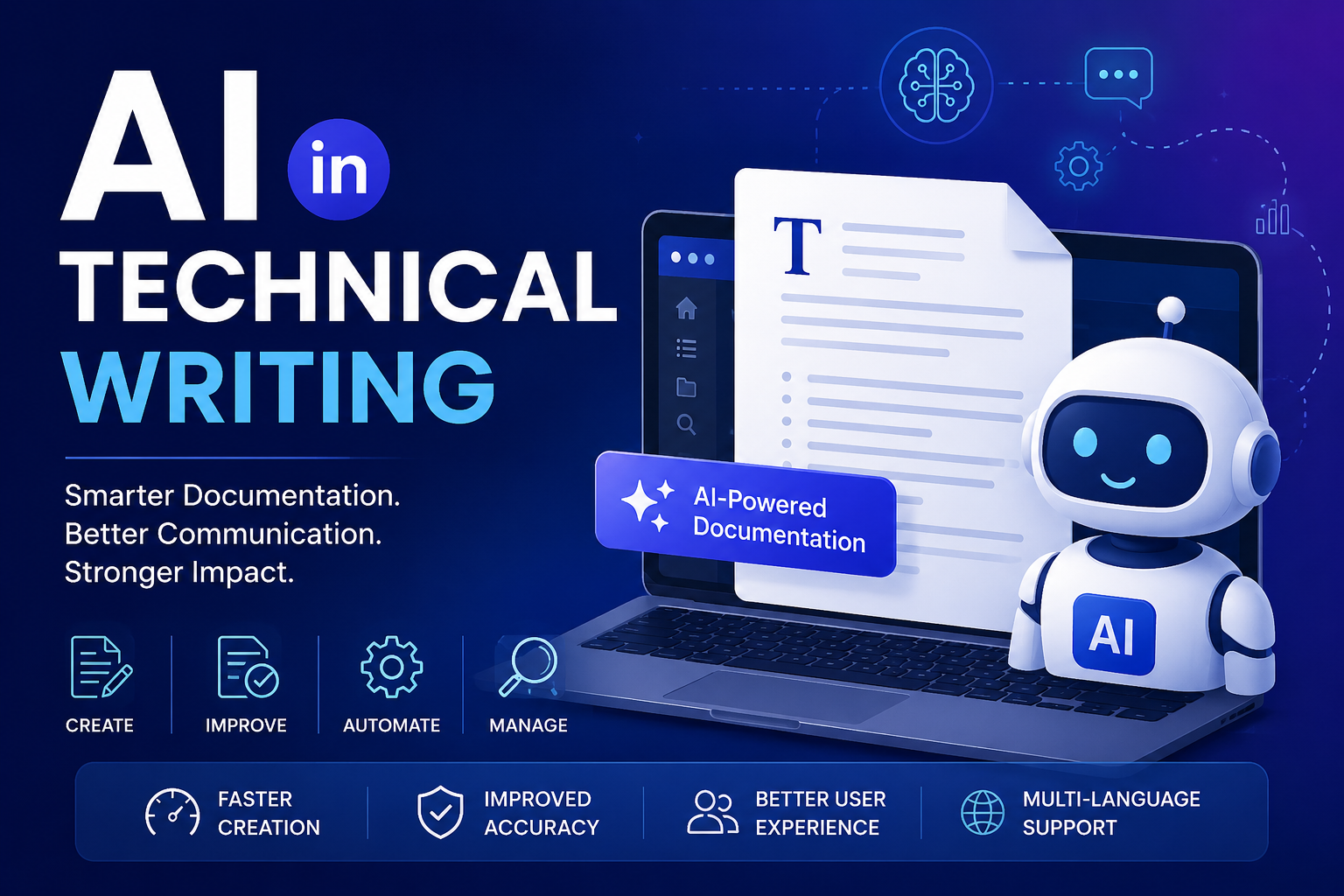
AI in Technical Writing
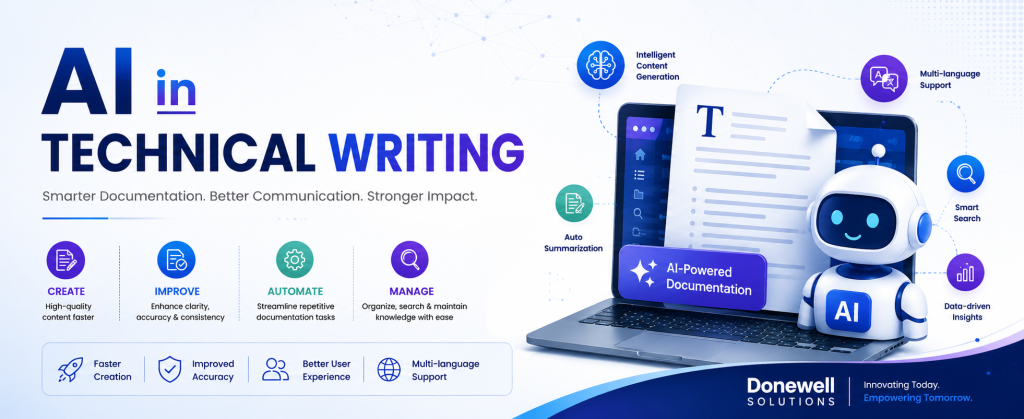
In today’s fast-moving digital world, technical writing is no longer limited to creating manuals and user guides. Artificial Intelligence (AI) is transforming how organizations create, manage, and deliver technical documentation—making the process faster, smarter, and more user-focused.
Technical writing plays a critical role in helping users understand products, services, systems, and processes. With AI-powered tools, organizations can now automate repetitive tasks, improve document quality, and create content that is easier to understand.
AI assists technical writers by generating first drafts, improving grammar and readability, organizing information, and maintaining consistency across multiple documents. It can also support document updates, convert technical concepts into simplified language, and help maintain knowledge repositories.
Organizations across industries are adopting AI to enhance:
- User Manuals & Product Documentation
- Standard Operating Procedures (SOPs)
- Technical Reports
- API & Software Documentation
- Knowledge Base Articles
- Training Materials
- Process Documentation
One of the biggest advantages of AI in technical writing is speed. Teams can produce high-quality documentation in less time while maintaining accuracy and consistency. AI also enables smarter search capabilities, multilingual support, and better collaboration among teams.
However, AI works best when combined with human expertise. Technical writers remain essential for validating information, ensuring clarity, maintaining brand voice, and delivering user-centric documentation.
The future of technical writing is not replacing humans—it is empowering teams to create better content with greater efficiency and impact.
Donewell Solutions believes in combining innovation and technology to deliver smarter documentation and digital transformation services.